Ancient Greece:
Ancient Greece is the civilization belonging to the period of Greek history lasting from the Archaic period
of the 8th to 6th centuries BC to 146 BC and the Roman conquest of Greece after the Battle of Corinth.
At the center of this time period is Classical Greece, which flourished during the 5th to 4th centuries BC,
at first under Athenian leadership successfully repelling the military threat of Persian invasion.
The Athenian Golden Age ends with the defeat of Athens at the hands of Sparta in the Peloponnesian War in 404 BC.

Following the conquests of Alexander the Great, Hellenistic civilization flourished from Central Asia to the
western end of the Mediterranean Sea. Classical Greek culture had a powerful influence on the Roman Empire,
which carried a version of it to many parts of the Mediterranean region and Europe, for which reason Classical
Greece is generally considered to be the seminal culture which provided the foundation of Western civilization.

Athens, after a tyranny in the second half of the 6th century, established ancient Europe's first democracy as
a radical solution to prevent the aristocracy from regaining power. A citizens' assembly (the Ecclesia), for the
discussion of city policy, had existed since the reforms of Draco; all citizens were permitted to attend after
the reforms of Solon, but the poorest citizens could not address the assembly or run for office. With the
establishment of the democracy, the assembly became the de jure mechanism of government; all citizens had equal
rivileges in the assembly. However, non-citizens, foreigners living in Athens, slaves and women had no political
rights at all. After the rise of the democracy in Athens, other city-states founded democracies. However, many
retained more traditional forms of government. As so often in other matters, Sparta was a notable exception to the
rest of Greece, ruled through the whole period by not one, but two hereditary monarchs. This was a form of diarchy.
Athens:

Ancient Athens was inhabited around 3,000 years ago. Athens has one of the longest histories of any city in
Europe and in the world. It became the leading city of Ancient Greece in the first millennium BC. Its cultural
achievements during the 5th century BC laid the foundations of western civilization. During the Middle Ages,
Athens experienced decline and then a recovery under the Byzantine Empire. Athens was relatively prosperous
during the Crusades, benefiting from medieval Italian trade.Fifth-century Athens refers to the Greek city-state
Athens in the period of roughly 480 BC-404 BC. This was a period of Athenian political hegemony, economic growth
and cultural flourishing known as the Golden Age of Athens or Age of Pericles. The period began in 480 BC when an
Athenian-led coalition of city-states, known as the Delian League, defeated the Persians at Salamis. As the fifth
century wore on, what started as an alliance of independent city-states gradually became an Athenian empire.
Eventually, Athens abandoned the pretense of parity among its allies and relocated the Delian League treasury
from Delos to Athens, where it funded the building of the Athenian Acropolis. With its enemies under its feet
nd its political fortunes guided by legendary statesman and orator Pericles, Athens as a center of literature,
philosophy (see Greek philosophy) and the arts (see Greek theatre). Some of the most important figures of Western
cultural and intellectual history lived in Athens during this period: the dramatists Aeschylus, Aristophanes,
Euripides and Sophocles, the philosophers Aristotle, Plato and Socrates.
Sparta:
Sparta was a Dorian Greek military state, originally centered in Laconia. As a city-state devoted to military
training, Sparta possessed the most formidable army in the Greek world, and after achieving notable victories
over the Athenian and Persian Empires, regarded itself as the natural protector of Greece. Laconia or
Lacedaemon (Λακεδαίμων) was the name of the wider city-state centered at the city of Sparta, though the name
"Sparta" is now used for both.
Following the victories in the Messenian Wars (631 BC), Sparta's reputation as a land-fighting force was unequaled.
In 480 BC a small Spartan unit under King Leonidas made a legendary last stand against a massive, invading Persian army at
the Battle of Thermopylae. One year later, Sparta assembled at full strength and led a Greek alliance against the Persians
at Plataea. There, a decisive Greek victory put an end to the Greco-Persian War along with Persian ambition of expanding
into Europe. Even though this war was won by a pan-Hellenic army, credit was given to Sparta, who, besides being the
protagonist at Thermopylae and Plataea, had been the nominal leader of the entire Greek expedition.
In later Classical times, Sparta along with Athens, Thebes and Persia had been the main regional powers fighting
for supremacy against each other. As a result of the Peloponnesian War, Sparta, a traditionally continental
culture, became a naval power. At the peak of her power, she subdued many of the key Greek states and even managed
to overpower the powerful Athenian navy. By the end of the 5th century, she stood out as a state which had defeated
are both the Persian and Athenian Empires, a period which marks the Spartan Hegemony.Sparta was, above all, a
militarist state, and emphasis on military fitness began virtually at birth.
Macedonia Empire:
Macedonia was the name of an ancient kingdom in the northernmost part of ancient Greece, bordering Epirus to the
west and the ancient thracian Odrysian kingdom to the east. For a brief period it became the most powerful state
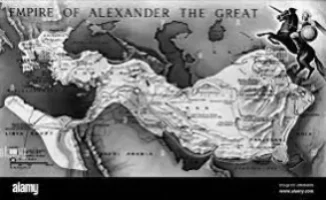
in the world after Alexander the Great conquered most of the known world, including the entire Achaemenid Empire,
inaugurating the Hellenistic period of Greek history.The rise of Macedon, from a small kingdom at the periphery of
Classical Greek affairs, to one which came to dominate the entire Hellenic world (and beyond), occurred in the space
of just 25 years, between 359 and 336 BC. This ascendancy is largely attributable to the personality and policies of
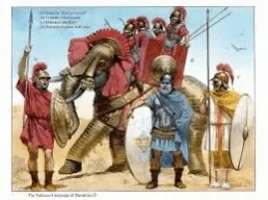
Philip II of Macedon. Philip's military skills and expansionist vision of Macedonian greatness brought him early success.
He had however first to re-establish a situation which had been greatly worsened by the defeat against the Illyrians in
which King Perdiccas himself had died. The Paionians and the Thracians had sacked and invaded the eastern regions of the
country, while the Athenians had landed, at Methoni on the coast, a contingent under a Macedonian pretender called Argeus.
Using diplomacy, Philip pushed back Paionians and Thracians promising tributes, and crushed the 3,000 Athenian hoplites (359).
Momentarily free from his opponents, he concentrated on strengthening his internal position and, above all, his army. His most
important innovation was doubtless the introduction of the phalanx infantry corps, armed with the famous sarissa, an exceedingly

long spear, at the time the most important army corps in Macedonia.Philip's son, Alexander the Great, managed to briefly

extend Macedonian power not only over the central Greek city-states, but also to the Persian empire, including Egypt and lands
as far east as the fringes of India. Alexander's adoption of the styles of government of the conquered territories was
accompanied by the spread of Greek culture and learning through his vast empire. Although the empire fractured into multiple
Hellenic regimes shortly after his death, his conquests left a lasting legacy, not least in the new Greek-speaking cities
founded across Persia's western territories, heralding the Hellenistic period. In the partition of Alexander's empire among
the Diadochi, Macedonia fell to the Antipatrid dynasty, which was overthrown by the Antigonid dynasty after only a few years.
Hellenistic States:

Alexander had made no special preparations for his succession in his newly founded empire and the Apocrypha of his
death state that on his death-bed he willed it to those that performed actions well and powerfully. The result was


the wars of the Diadochi between his generals (the Diadochi, or 'Successors'), which lasted for forty years before a
more-or-less stable arrangement was established, consisting of four major domains:
- The Antigonid dynasty in Macedon and central Greece;
- The Ptolemaic dynasty in Egypt based at Alexandria;
- The Seleucid dynasty in Syria and Mesopotamia based at Antioch;
- The Attalid dynasty in Anatolia based at Pergamum.
A further two kingdoms later emerged, the so-called Greco-Bactrian and Indo-Greek kingdom. Hellenistic culture
thrived in its preservation of the past. The states of the Hellenistic period were deeply fixated with the past
and its seemingly lost glories. Athens retained its position as the most prestigious seat of higher education,
especially in the domains of philosophy and rhetoric, with considerable libraries. Alexandria was a center of Greek
learning and the Library of Alexandria had 700,000 volumes. The city of Pergamon became a major center of book
production, possessing a library of some 200,000 volumes, second only to Alexandria's. The island of Rhodes boasted
a famous finishing school for politics and diplomacy. Antioch was founded as a metropolis and center of Greek
learning which retained its status into the era of Christianity. Seleucia replaced Babylon as the metropolis of the
lower Tigris.
Thracian States:
The Odrysian Kingdom proper was a Thracian kingdom that existed from the early 5th century BC at least until the
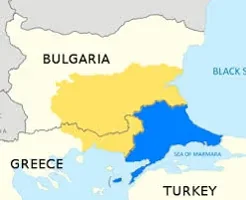
mid-3rd century BC. It consisted mainly of present-day Bulgaria and parts of Southeastern Romania (Northern Dobruja),
Northern Greece and European Turkey. Dominated by the eponymous Odrysian people, it was the largest and most powerful
Thracian realm and the first larger political entity of the eastern Balkans. Before the foundation of Seuthopolis in the
late 4th century it had no fixed capital.The Odrysian kingdom was founded by king Teres I, exploiting the collapse
of the Persian presence in Europe due to failed invasion of Greece in 480-79. Teres and his son Sitalces pursued a
policy of expansion, making the kingdom one of the most powerful of its time. Throughout much of its early history
it remained an ally of Athens and even joined the Peloponnesian War on its side. By 400 the state showed first signs
of fatigue, although the skilled Cotys I initiated a brief renaissance that lasted until his murder in 360.
The Getae, a northern Thracian people located between the northeastern foothills of the Haemus range
and the lower Danube and the Black Sea, had been part of the Odrysian realm since Teres I, even though it is not
clear how tightly they were actually incorporated into the state. When and how the Getae became independent is not
discussed in the available sources. Perhaps they became independent during the rule of Cotys I or after his
death in 360. Rich funeral treasures from the second half of the 4th century, like those of Agighiol, Peretu or
Borovo, attest to the increasing wealth of the Getic elite. Several artefacts seem to have originated in the
Odrysian kingdom and may well have been prestige gifts.By the middle of the 4th century there existed a Getic
kingdom that was to thrive for a century.The Getic capital was Helis, which has been identified with the
archaeological site of Sboryanovo, which was founded in the 330s or early 320s and housed around 10.000
inhabitants. It seems that the Getae also became active in Muntenia north of the Danube,a region that
would come to constitute a part of the "Dacia" of imperial Roman historiography. The first Getic king to appear
in the sources was Cothelas, who married his daughter Meda to Philip II, thus concluding an alliance between the
two states.This probably happened during or shortly after Philip's conquest of the Odrysians. The kingdom
survived two wars with Lysimachus and the Celtic invasion in around 280, but eventually disintegrated a few decades later.
Helis/Sboryanovo was completely destroyed by an earthquake in the middle of the 3rd century.
With Alexander's absence in Asia, the Strategoi of Thrace engaged in rebellions and failed expeditions against the
Getae, greatly unsettling the country in the process.At the end of the 330s or in the mid-320s (the dating is
not entirely clear), a certain Seuthes, later known as Seuthes III, instigated a Thracian rebellion.He seems to
have been an Odrysian and may have been associated with the royal house of Cersebleptes, although his social
background must remain speculation.Seuthes' goal seems to have been the revival of an independent Odrysian
state.Seuthes ruled in the interior, what is Thrace north of the Rhodopes, but not the coastal regions of the
Aegean and Black Sea.Probably after the death of Alexander in 323, he founded the capital town of Seuthopolis,
on the Tonzos river, near modern Kazanlak, and named after himself.The Dacian Kingdom reached its
greatest territorial extent under Burebista's rule (82BC-44BC). During his rule, he conquered territories from
Central Europe to the Balkans, reaching the Aegean sea. He is well known by the Greek scholars as the "Celtic Slayer",
because he defeated and killed many Celtic tribes from the Balkans (Scordisci) and the Central Europe (Boii & Taurisci).
In 48BC Burebista tried to influence the Roman politics, during the Roman civil war by allying with Pompey Magnus
against the victorious Julius Caesar. But Pompey was defeated and later killed in Ptolemaic Egypt. After all of that,
Julius Caesar viewed Burebista's Empire as a threat and he planned to invade it alongside with the Parthian Empire.
But he was assassinated in 44 BC. Burebista's state collapsed into various kingdoms. It will never be unified until
Decebalus becomes the last King in 87AD.The Thoracian kingdom, also known as the Sapaean kingdom, was the
continuation of the Thracian state from the middle of the 1st century BC to 46 AD. It was dominated by the
Sapaean tribe, who ruled from their capital Bizye in what is now northwestern Turkey. Initially only of limited
relevance, its power grew significantly after the battle of Actium in 31 BC, when Emperor Augustus installed a new
dynasty that proved to be highly loyal and expansive. Conquering and ruling much of Thrace on Roman behalf, it
lasted until 46 AD, when Emperor Claudius annexed the kingdom and made Thrace a Roman province.
Ancient Rome and Roman Empire:


Ancient Rome is widely known as ancient Europe's largest and most powerful civilization. After the Punic
Wars Rome was already one of the biggest empires on the planet but its expansion continued with the invasions
of Greece and Asia Minor. By 27 BC Rome had control over half of Europe as well as Northern Africa and large
amounts of the Middle East. Rome also had a developed culture, building on the earlier Greek culture. From the
time of Augustus to the Fall of the Western Empire, Rome dominated Western Eurasia, comprising the majority of
its population.Roman expansion began long before the state was changed into an Empire and reached its zenith
under emperor Trajan with the conquest of Mesopotamia and Armenia in AD 113. The period of the
"Five Good Emperors" saw a successions of peaceful years and the Empire was prosperous. Each emperor of this
period was adopted by his predecessor. The Nerva–Antonine dynasty was a dynasty of seven consecutive Roman
Emperors who ruled over the Roman Empire from 96 to 192. These Emperors are Nerva, Trajan, Hadrian, Antoninus
Pius, Marcus Aurelius, Lucius Verus, and Commodus.



Seleucid Empire:
The Seleucid Empire was a Hellenistic empire, and the eastern remnant of the former Achaemenid Persian Empire
following its breakup after Alexander the Great's invasion. The Seleucid Empire was centered in the near East.
It was a center of Hellenistic culture which maintained the Greek customs and Greek-speaking Macedonian elite.
Seleucid expansion into Greece was abruptly halted after decisive defeats at the hands of the Roman army.
Much of the eastern part of the empire was conquered by the Parthians under Mithridates I of Parthia in the
mid-2nd century BC, yet the Seleucid kings continued to rule a rump state from Syria until the invasion by
Armenian king Tigranes the Great and their ultimate overthrow by the Roman general Pompey.

Ptolemaic Empire:
The Ptolemaic dynasty, sometimes also known as the Lagids, was a Greek royal family which ruled
the Ptolemaic Empire in Egypt during the Hellenistic period.Ptolemy, one of the seven somatophylakes (bodyguards)
who served as Alexander the Great's generals and deputies, was appointed satrap of Egypt after Alexander's death
in 323 BC. In 305 BC, he declared himself King Ptolemy I, later known as "Soter" (saviour). The Egyptians soon
accepted the Ptolemies as the successors to the pharaohs of independent Egypt. Ptolemy's family ruled Egypt until
the Roman conquest of 30 BC. All the male rulers of the dynasty took the name Ptolemy.Ptolemaic Egypt began
when Ptolemy I Soter declared himself Pharaoh of Egypt in 305 BC and ended with the death of queen Cleopatra
VII of Egypt and the Roman conquest in 30 BC. The Ptolemaic Kingdom was a powerful Hellenistic state, extending
from southern Syria in the east, to Cyrene to the west, and south to the frontier with Nubia. Alexandria became

the capital city and a center of Greek culture and trade. To gain recognition by the native Egyptian populace,
they named themselves as the successors to the Pharaohs. The later Ptolemies took on Egyptian traditions, had
themselves portrayed on public monuments in Egyptian style and dress, and participated in Egyptian religious life.
Hellenistic culture continued to thrive in Egypt well after the Muslim conquest. The Ptolemies faced rebellions of
native Egyptians often caused by an unwanted regime and were involved in foreign and civil wars that led to the
decline of the kingdom and its annexation by Rome.
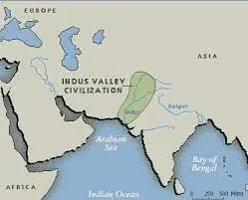
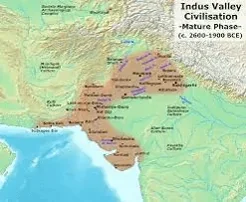
 The Indus Valley Civilization was a Bronze Age civilization (3300–1300 BC). Along with Mesopotamia
and Pharaonic Egypt, it was a cradle of early civilization in the Old World (Childe 1950). Of the
three, the Indus was the most expansive, covering an area of 1.25 million km2
and encompassing what is today most of Pakistan, parts of Afghanistan, and north west India. It
flourished in the basins of the Indus River, one of the major rivers of Asia, and the Ghaggar-Hakra
River,
which once coursed through northwest India and eastern Pakistan. At its peak, the Indus Civilization may
have had a population of over five million. Inhabitants of the ancient Indus river valley developed new
techniques in handicraft (carnelian products, seal carving) and metallurgy (copper, bronze, lead, and
tin).

The Indus cities are noted for their urban planning, baked brick houses, elaborate drainage systems,
water
supply systems, and clusters of large non-residential buildings.
The Indus Valley Civilization was a Bronze Age civilization (3300–1300 BC). Along with Mesopotamia
and Pharaonic Egypt, it was a cradle of early civilization in the Old World (Childe 1950). Of the
three, the Indus was the most expansive, covering an area of 1.25 million km2
and encompassing what is today most of Pakistan, parts of Afghanistan, and north west India. It
flourished in the basins of the Indus River, one of the major rivers of Asia, and the Ghaggar-Hakra
River,
which once coursed through northwest India and eastern Pakistan. At its peak, the Indus Civilization may
have had a population of over five million. Inhabitants of the ancient Indus river valley developed new
techniques in handicraft (carnelian products, seal carving) and metallurgy (copper, bronze, lead, and
tin).
The Indus cities are noted for their urban planning, baked brick houses, elaborate drainage systems,
water
supply systems, and clusters of large non-residential buildings.

 The Nanda Empire originated from Magadha in Ancient India during the 5th and 4th centuries BC. At its
greatest
extent, the Nandas ruled much of Northern India. The Nandas are sometimes described as the first empire
builders in the recorded history of India. They inherited the large kingdom of Magadha. They built up a
vast

army.The Nandas never had the opportunity to see their army up against Alexander the Great, who invaded
India
at the time of Dhana Nanda, since Alexander had to confine his campaign to the plains of Punjab, for his
forces
at the prospect of facing a further mighty Magadha army, mutinied at the Hyphasis River (the modern Beas
River)
refusing to march any further. There had been confluence of Indian, Persian and Greek civilization in
those period.
Continuing the early Hindu Vedas and Upanishads texts, Nanda had an influence on Indian social, legal
and political
systems. In addition, the region of Gandhara, or present-day eastern Afghanistan and northwest Pakistan,
became a
mixture of various cultures, including Greek and Indian ones, and gave rise to a hybrid culture,
Greco-Buddhism,
which influenced the artistic development of Mahayana Buddhism.
The Nanda Empire originated from Magadha in Ancient India during the 5th and 4th centuries BC. At its
greatest
extent, the Nandas ruled much of Northern India. The Nandas are sometimes described as the first empire
builders in the recorded history of India. They inherited the large kingdom of Magadha. They built up a
vast
army.The Nandas never had the opportunity to see their army up against Alexander the Great, who invaded
India
at the time of Dhana Nanda, since Alexander had to confine his campaign to the plains of Punjab, for his
forces
at the prospect of facing a further mighty Magadha army, mutinied at the Hyphasis River (the modern Beas
River)
refusing to march any further. There had been confluence of Indian, Persian and Greek civilization in
those period.
Continuing the early Hindu Vedas and Upanishads texts, Nanda had an influence on Indian social, legal
and political
systems. In addition, the region of Gandhara, or present-day eastern Afghanistan and northwest Pakistan,
became a
mixture of various cultures, including Greek and Indian ones, and gave rise to a hybrid culture,
Greco-Buddhism,
which influenced the artistic development of Mahayana Buddhism.

 The Mauryan Empire was the first political entity to unite most of the Indian subcontinent and expand
into Central
Asia. Its cultural influence also extended west into Egypt and Syria, and east into Thailand, China and
Burma.
The Empire was founded in 322 BC by Chandragupta Maurya. Chandragupta waged a war against the nearby
Greek powers
and won, forcing the Greeks to surrender large amounts of land. Under the reign of Ashoka the Great, the
empire
became pacifist and turned to spreading its soft power in the form of Buddhism.
The Mauryan Empire was the first political entity to unite most of the Indian subcontinent and expand
into Central
Asia. Its cultural influence also extended west into Egypt and Syria, and east into Thailand, China and
Burma.
The Empire was founded in 322 BC by Chandragupta Maurya. Chandragupta waged a war against the nearby
Greek powers
and won, forcing the Greeks to surrender large amounts of land. Under the reign of Ashoka the Great, the
empire
became pacifist and turned to spreading its soft power in the form of Buddhism.
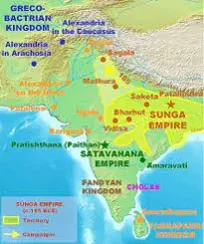
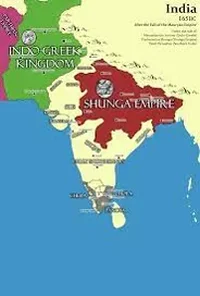
 The Shunga Empire is a Magadha dynasty that controlled North-central and Eastern India as well as parts
of the
northwest (now Pakistan) from around 185 to 73 BC. It was established after the fall of the Indian
Maurya Empire.
The capital of the Shungas was Pataliputra. Later kings such as Bhagabhadra also held court at Vidisha,
modern
Besnagar in Eastern Malwa.The Shunga Empire is noted for its numerous wars with both foreign and
indigenous
powers. While there is much debate on the religious politics of the Shunga dynasty, it is recognized for
a
number of contributions. Art, education, philosophy, and other learning flowered during this period.
Most notably,
Patanjali's Yoga Sutras and Mahabhasya were composed in this period, Panini composed the first Sanskrit
grammarian
Ashtadayai. It is also noted for its subsequent mention in the Malavikaagnimitra. This work was composed
by
Kalidasa in the later Gupta period, and romanticized the love of Malavika and King Agnimitra, with a
background
of court intrigue. Artistry on the subcontinent also progressed with the rise of the Mathura school,
which is
considered the indigenous counterpart to the more Hellenistic Gandhara school of Afghanistan and
Pakistan.

During the historical Shunga period (185 to 73 BC), Buddhist activity also managed to survive somewhat
in
central India (Madhya Pradesh) as suggested by some architectural expansions that were done at the
stupas
of Sanchi and Barhut, originally started under Emperor Ashoka. It remains uncertain whether these works
were due to the weakness of the control of the Shungas in these areas, or a sign of tolerance on their
part.The last of the Shunga emperor was Devabhuti (83–73 BC). He was assassinated by his minister
(Vasudeva Kanva) and is said to have been overfond of the company of women. The Shunga dynasty was then
replaced by the subsequent Kanvas.
The Shunga Empire is a Magadha dynasty that controlled North-central and Eastern India as well as parts
of the
northwest (now Pakistan) from around 185 to 73 BC. It was established after the fall of the Indian
Maurya Empire.
The capital of the Shungas was Pataliputra. Later kings such as Bhagabhadra also held court at Vidisha,
modern
Besnagar in Eastern Malwa.The Shunga Empire is noted for its numerous wars with both foreign and
indigenous
powers. While there is much debate on the religious politics of the Shunga dynasty, it is recognized for
a
number of contributions. Art, education, philosophy, and other learning flowered during this period.
Most notably,
Patanjali's Yoga Sutras and Mahabhasya were composed in this period, Panini composed the first Sanskrit
grammarian
Ashtadayai. It is also noted for its subsequent mention in the Malavikaagnimitra. This work was composed
by
Kalidasa in the later Gupta period, and romanticized the love of Malavika and King Agnimitra, with a
background
of court intrigue. Artistry on the subcontinent also progressed with the rise of the Mathura school,
which is
considered the indigenous counterpart to the more Hellenistic Gandhara school of Afghanistan and
Pakistan.
During the historical Shunga period (185 to 73 BC), Buddhist activity also managed to survive somewhat
in
central India (Madhya Pradesh) as suggested by some architectural expansions that were done at the
stupas
of Sanchi and Barhut, originally started under Emperor Ashoka. It remains uncertain whether these works
were due to the weakness of the control of the Shungas in these areas, or a sign of tolerance on their
part.The last of the Shunga emperor was Devabhuti (83–73 BC). He was assassinated by his minister
(Vasudeva Kanva) and is said to have been overfond of the company of women. The Shunga dynasty was then
replaced by the subsequent Kanvas.


 The Chola dynasty ruled parts of southern India. The Tamil dynasty which was one of the longest-ruling
dynasties
in southern India. The earliest datable references to this Tamil dynasty are in inscriptions from the
3rd century
BC left by Ashoka, of Maurya Empire; as one of the Three Crowned Kings, the dynasty continued to govern
over
varying territory until the 13th century AD. By the 9th century, under Rajaraja Chola and his son
Rajendra Chola,
the Cholas rose as a notable power in south Asia. The Chola Empire stretched as far as Bengal. At its
peak,
the empire spanned almost 3,600,000 km2 (1,400,000 sq mi).[citation needed] Rajaraja Chola conquered all
of
peninsular South India and parts of the Sri Lanka. Rajendra Chola's navies went even further, occupying
coasts
from Burma (now Myanmar) to Vietnam, the Andaman and Nicobar Islands, Lakshadweep, Sumatra, Java, Malaya
in
South East Asia and Pegu islands. He defeated Mahipala, the king of the Bengal, and to commemorate his
victory
he built a new capital and named it Gangaikonda Cholapuram.The heartland of the Cholas was the fertile
valley of
the Kaveri River, but they ruled a significantly larger area at the heightof their power from the later
half of the
9th century till the beginning of the 13th century. The whole country south of the Tungabhadra was
united and
held as one state for a period of two centuries and more. Under Rajaraja Chola I and his son Rajendrala
I, the
dynasty became a military, economic and cultural power in South Asia and South-east Asia.The power of
the
new empire was proclaimed to the eastern world by the celebrated expedition to the Ganges which Rajendra
Chola I
undertook and by theoverthrow after an unprecedented naval war of the maritime empire of Srivijaya, as
well as by
the repeated embassies to China.During the period 1010-1200, the Chola territories stretched from the
islands of
the Maldives in the south to as far north as the banks of the Godavari River in Andhra Pradesh.Rajaraja
Chola
conquered peninsular South India, annexed parts of what is now Sri Lanka and occupied the islands of the
Maldives.
Rajendra Chola sent a victorious expedition to North India that touched the river Ganges and defeated
the Pala
ruler of Pataliputra, Mahipala. He also successfully invaded kingdoms of the Malay Archipelago.The Chola
dynasty went into decline at the beginning of the 13th century with the rise of the Pandyas,who
ultimately caused

their downfall.The Cholas left a lasting legacy. Their patronage of Tamil literature and their zeal in
building
temples has resulted in some great works of Tamil literature and architecture.The Chola kings were avid
builders
and envisioned the temples in their kingdoms not only as places of worship but also as centres of
economic activity.
They pioneered a centralised form of government and established a disciplined bureaucracy.
The Chola dynasty ruled parts of southern India. The Tamil dynasty which was one of the longest-ruling
dynasties
in southern India. The earliest datable references to this Tamil dynasty are in inscriptions from the
3rd century
BC left by Ashoka, of Maurya Empire; as one of the Three Crowned Kings, the dynasty continued to govern
over
varying territory until the 13th century AD. By the 9th century, under Rajaraja Chola and his son
Rajendra Chola,
the Cholas rose as a notable power in south Asia. The Chola Empire stretched as far as Bengal. At its
peak,
the empire spanned almost 3,600,000 km2 (1,400,000 sq mi).[citation needed] Rajaraja Chola conquered all
of
peninsular South India and parts of the Sri Lanka. Rajendra Chola's navies went even further, occupying
coasts
from Burma (now Myanmar) to Vietnam, the Andaman and Nicobar Islands, Lakshadweep, Sumatra, Java, Malaya
in
South East Asia and Pegu islands. He defeated Mahipala, the king of the Bengal, and to commemorate his
victory
he built a new capital and named it Gangaikonda Cholapuram.The heartland of the Cholas was the fertile
valley of
the Kaveri River, but they ruled a significantly larger area at the heightof their power from the later
half of the
9th century till the beginning of the 13th century. The whole country south of the Tungabhadra was
united and
held as one state for a period of two centuries and more. Under Rajaraja Chola I and his son Rajendrala
I, the
dynasty became a military, economic and cultural power in South Asia and South-east Asia.The power of
the
new empire was proclaimed to the eastern world by the celebrated expedition to the Ganges which Rajendra
Chola I
undertook and by theoverthrow after an unprecedented naval war of the maritime empire of Srivijaya, as
well as by
the repeated embassies to China.During the period 1010-1200, the Chola territories stretched from the
islands of
the Maldives in the south to as far north as the banks of the Godavari River in Andhra Pradesh.Rajaraja
Chola
conquered peninsular South India, annexed parts of what is now Sri Lanka and occupied the islands of the
Maldives.
Rajendra Chola sent a victorious expedition to North India that touched the river Ganges and defeated
the Pala
ruler of Pataliputra, Mahipala. He also successfully invaded kingdoms of the Malay Archipelago.The Chola
dynasty went into decline at the beginning of the 13th century with the rise of the Pandyas,who
ultimately caused
their downfall.The Cholas left a lasting legacy. Their patronage of Tamil literature and their zeal in
building
temples has resulted in some great works of Tamil literature and architecture.The Chola kings were avid
builders
and envisioned the temples in their kingdoms not only as places of worship but also as centres of
economic activity.
They pioneered a centralised form of government and established a disciplined bureaucracy.


 In the 4th and 5th centuries, the Gupta Empire unified much of India. This period is called the Golden
Age of India
and was marked by extensive achievements in science, technology, engineering, art, dialectic,
literature, logic,
mathematics, astronomy, religion and philosophy that crystallized the elements of what is generally
known as Hindu
culture. Chandragupta I, Samudragupta, and Chandragupta II were the most notable rulers of the Gupta
dynasty.
The high points of this cultural creativity are magnificent architectures, sculptures and paintings. The
Gupta
period produced scholars such as Kalidasa, Aryabhata, Varahamihira, Vishnu Sharma, and Vatsyayana who
made great
advancements in many academic fields. Science and political administration reached new heights during
the Gupta era.
Strong trade ties also made the region an important cultural center and set the region up as a base that
would
influence nearby kingdoms and regions in Burma, Sri Lanka, Indonesian Archipelago and Indochina.
In the 4th and 5th centuries, the Gupta Empire unified much of India. This period is called the Golden
Age of India
and was marked by extensive achievements in science, technology, engineering, art, dialectic,
literature, logic,
mathematics, astronomy, religion and philosophy that crystallized the elements of what is generally
known as Hindu
culture. Chandragupta I, Samudragupta, and Chandragupta II were the most notable rulers of the Gupta
dynasty.
The high points of this cultural creativity are magnificent architectures, sculptures and paintings. The
Gupta
period produced scholars such as Kalidasa, Aryabhata, Varahamihira, Vishnu Sharma, and Vatsyayana who
made great
advancements in many academic fields. Science and political administration reached new heights during
the Gupta era.
Strong trade ties also made the region an important cultural center and set the region up as a base that
would
influence nearby kingdoms and regions in Burma, Sri Lanka, Indonesian Archipelago and Indochina.