Early Dynastic Period:


The Archaic or Early Dynastic Period of Egypt is the era immediately following the unification of Upper and
Lower Egypt c.
3100 BC. It is generally taken to include the First and Second Dynasties, lasting from the end of the Naqada
III
archaeological period until about 2686 BC, or the beginning of the Old Kingdom.With the First Dynasty,
the
capital moved from Thinis to Memphis with a unified Egypt ruled by an Egyptian god-king. Abydos remained the
major
holy land in the south. The hallmarks of ancient Egyptian civilization, such as art, architecture and many
aspects of
religion, took shape during the Early Dynastic period. During the Early Dynastic period, the pharaohs
established the
earliest Central Government in the world.
Old Kingdom:



The Old Kingdom is the period spanning c. 2686–2181 BC. It is also known as the "Age of the Pyramids" or the
"Age of the

Pyramid Builders", as it encompasses the reigns of the great pyramid builders of the Fourth Dynasty—King
Sneferu perfected
the art of pyramid-building and the pyramids of Giza were constructed under the kings Khufu, Khafre and
Menkaure. Egypt
attained its first sustained peak of civilization—the first of three so-called "Kingdom" periods (followed
by the Middle
Kingdom and New Kingdom) which mark the high points of civilization in the lower Nile Valley.
During the Old Kingdom, the pyramid building in ancient Egypt began during the Third Dynasty under the rule
of king Djoser
when he built the Step Pyramid of Djoser (Egypt's first Pyramid) and peaked during Fourth Dyansty during the
construction
of the Giza Pyramids.During the Fifth Dynasty the pyramid building declined in Egypt. The Pyramid Texts, the
oldest
ritual texts from ancient Egypt first appeared in the late fifth Dynasty.
Middle Kingdom:
The Middle Kingdom of Egypt (also known as "The Period of Reunification") is the period in the history of
ancient Egypt
following a period of political division known as the First Intermediate Period. The Middle Kingdom lasted
from around

2050 BC to around 1710 BC, stretching from the reunification of Egypt under the reign of Mentuhotep II of
the Eleventh
Dynasty to the end of the Twelfth Dynasty. The Eleventh Dynasty ruled from Thebes and the Twelfth Dynasty
ruled from
el-Lisht.The middle kingdom reached its peak under the pharaohs Senusret III and Amenemhat III. Senusret III
was a
great pharaoh of the Twelfth Dynasty and is considered to be the greatest pharaoh in the middle kingdom.
However,
The reign of Amenemhat III was the height of Middle Kingdom economic prosperity. His reign is remarkable for
the
degree to which Egypt exploited its resources.
New Kingdom:
The New Kingdom began around 1550 B.C when king Ahmose I became the king of Egypt, defeated the Hyksos and
reunified
Egypt. The pharaohs of the new kingdom established a period of unprecedented prosperity by securing their
borders and
strengthening diplomatic ties with their neighbors. Military campaigns waged under Tuthmosis I and his
grandson
Tuthmosis III extended the influence of the pharaohs to the largest empire Egypt had ever seen. Tuthmosis
III is
recorded to have captured 350 cities during his rule and conquered much of the Near East from the Euphrates
to Nubia
during seventeen known military campaigns. During the reign of Amenhotep III, Egypt entered a period of
unprecedented
prosperity and artistic splendour, Egypt reached the peak of its artistic and international power in his
reign.
Amenhotep IV ascended the throne and instituted a series of radical and chaotic reforms. Changing his name
to Akhenaten,
touted the god Aten as the supreme deity, suppressed the worship of other deities, and attacked the power of
the priestly
establishment. Moving the capital to the new city of Akhetaten, he turned a deaf ear to foreign affairs and
absorbed
himself in his new religion and artistic style. After his death, the religion of the Aten was quickly
abandoned, and
the subsequent pharaohs erased all mention of Akhenaten's Egyptian heresy, now known as the Amarna Period.

Ramesses the Great ascended the throne, and went on to build more temples, erect more statues and obelisks,
and
sire more children than any other pharaoh in history. One of the greatest construction projects conducted by
Ramesses
was the city of Pi-Ramesses. The city covered an area of 18 km2 (as big as Rome). At its peak, The city was
home to a
population of 160,000-300,000. This would make Pi-Ramesses 2-4 times bigger than Yinxu (Second largest city
at that time).
Ramesses led his army against the Hittites in the Battle of Kadesh and, after fighting to a stalemate,
finally agreed to
the first recorded peace treaty. Egypt's wealth, however, made it a tempting target for invasion,
particularly by the
Libyans and the Sea Peoples. Initially, the military was able to repel these invasions during the reign of
Ramesses III,
but Egypt eventually lost control of Syria and Palestine. The impact of external threats was exacerbated by
internal problems
such as corruption, tomb robbery and civil unrest. The high priests at the temple of Amun in Thebes
accumulated vast tracts
of land and wealth, and their growing power splintered the country during the Third Intermediate Period.
Third Intermediate Period:
The Third Intermediate Period of Ancient Egypt began with the death of Pharaoh Ramesses XI in 1070 BC,
ending the
New Kingdom, and was eventually followed by the Late Period. Various points are offered as the beginning for
the
latter era, though it is most often regarded as dating from the foundation of the Twenty-Sixth Dynasty by
Psamtik I
in 664 BC.The first Dynasty of the Ancient Egyptian Third Intermediate Period is the Twenty-first Dynasty.
Its first
ruler is king Smendes who ruled only in Lower Egypt. The most powerful pharaohs of the Twenty-first dynasty
were
psusennes I and Siamun who built extensively compared to the other pharaohs of the dynasty. The Pharaohs of
the
Twenty-first Dynasty transported all the old Ramesside temples, obelisks, stelae, statues and sphinxes from
Pi-Ramesses
to the new capital Tanis. The obelisks and statues, the largest weighing over 200 tons, were transported in
one piece
while major buildings were dismantled into sections and reassembled at Tanis.
The country was firmly reunited by the Twenty-Second Dynasty founded by Shoshenq I in 945 BC (or 943 BC),
who descended
from Meshwesh immigrants, originally from Ancient Libya. Upon unifying Egypt, king Shoshenq I started
campaigning in the Levante . This brought stability to the country for well over a century and made Egypt a
superpower again, but after the reign of Osorkon II, particularly, the country had effectively split into
two states, with Shoshenq III of the Twenty-Second Dynasty controlling Lower Egypt by 818 BC while Takelot
II and his son Osorkon (the future Osorkon III) ruled Middle and Upper Egypt.
Late Period:
The Late Period of ancient Egypt refers to the last flowering of native Egyptian rulers after the Third

Intermediate Period beginning with the 26th Saite Dynasty founded by Psamtik I. The 26th Dynasty of Egypt
managed to regain Egypt's power for a short time before the Achaemenid Persian conquest of Egypt lead by
Cambyses II in 525 BC.
However, the Egyptians managed to gain independence from the Persians during a rebellion led by the rebel
Pharaoh Amyrtaeus around 404 B.C who established the Twenty-eighth Dynasty of Egypt. Egypt remained
independent during the Twenty-ninth Dynasty and Thirtieth Dynasty until the Persians invaded it again in 343
B.C. During that time, the Egyptians managed to repel several attacks from the Achaemenid Empire. The most
famous attack of them occurred in around 351 BC, when Artaxerxes III embarked on a campaign to recover
Egypt, which had revolted under his father, Artaxerxes II. Levying a vast army, Artaxerxes marched into
Egypt, and engaged Nectanebo II the founder of the Thirtieth Dynasty of Egypt. After a year of fighting the
Egyptian Pharaoh, Nectanebo inflicted a crushing defeat on the Persians with the support of mercenaries led
by the Greek generals Diophantus and Lamius.
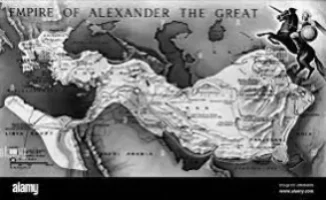
The Late period of ancient Egypt ends when Alexander the Great took Egypt from the Persians without war
around 332 B.C.
Legacy:
The many achievements of the ancient Egyptians include the quarrying, surveying and construction techniques
that facilitated the building of monumental pyramids, temples, and obelisks; a system of mathematics, a
practical and effective system of medicine, irrigation systems and agricultural production techniques, the
first known ships, Egyptian faience and glass technology, new forms of literature, and the earliest known
peace treaty. Egypt left a lasting legacy. Its art and architecture were widely copied, and its antiquities
carried off to far corners of the world. Its monumental ruins have inspired the imaginations of travellers
and writers for centuries. A new-found respect for antiquities and excavations in the early modern period
led to the scientific investigation of Egyptian civilization and a greater appreciation of its cultural
legacy, for Egypt and the world.
Kerman Empire:

The Kerma culture was an early civilization which flourished from around 2500 BC to about 1600 BC in Nubia,
present day Sudan, centered at Kerma. It seems to have been one of a number of Sudanese states during the
Middle Kingdom period of Ancient Egypt. In its latest phase, lasting from about 1700–1500 BC, it absorbed
the Sudanese kingdom of Sai and became a sizable, populous empire rivaling Egypt. Around 1500 BC, it was
absorbed into the Egyptian Empire, but rebellions continued for centuries. By the 11th century BC, the more
'Egyptianized' Kingdom of Kush emerged, apparently from Kerma, and regained the region's independence from
Egypt.
Kushian Empire:
The Kingdom of Kush was the earliest of the Subsaharan states in Africa as well as the first to implement
iron weapons. It was heavily influenced by Egyptian colonists, but in 1070 BC it became not only independent
of Egypt but a fierce rival. It successfully fought off attempts by Egypt to reconquer it, and it began to
extend influence over Upper Egypt. By the end of King Kashta's reign in 752 BC, Thebes was under Kushite
control. A slew of able successors took the rest of Egypt and reigned as the Twenty-fifth Dynasty of Egypt
stretching Kushite control from central Sudan to modern-day Israel. The Kushites did not maintain this
empire for long
and were beaten back by the Assyrians in 653 BC. However, Kush remained a powerful entity in the region. It
continued to meddle in Egyptian affairs and control trade resources originating in Subsaharan Africa. It
waged a hard-fought campaign against the Roman Empire (27 BC - 22 BC) under the leadership of Queen
Amanirenas, and achieved a more than amicable peace with the young Augustus Caesar. The two states worked as
allies, with Kush lending cavalry support to Rome in its conquest of Jerusalem in 70 AD.
The kingdom of Kush maintained its status as a regional power until its conquest by the Aksumite Empire in
350.
Macrobian Empire:
The Macrobians were an ancient people and kingdom situated in the Horn of Africa (Somalia) around the 1st
millennium BC. According to Herodotus, the Macrobians practiced an elaborate form of embalming. This, in
turn, suggested a knowledge on their part of anatomy and, at the very least, a grasp of the basics of
chemistry. The Macrobians preserved the bodies of the dead by first extracting moisture from the corpses,
then overlaying the bodies with a type of plaster, and finally decorating the exterior in vivid colors in
order to imitate the deceased as realistically as possible. They then placed the body in a hollow crystal
pillar, which they kept in their homes for a period of about a year.[19] Macrobia was also noted for its
gold, which was so plentiful that the Macrobians shackled their prisoners in golden chains.
The Ancient city-states located in northern Somalia, had a steady trade link with the Ancient Egyptians and
exported precious natural resources such as myrrh, frankincense and gum. This trade network continued all
the way into the classical era. The city states of Mossylon, Malao, Mundus and Tabae in Somalia engaged in a
lucrative trade network connecting Somali merchants with Phoenicia, Ptolemaic Egypt, Greece, Parthian
Persia, Saba, Nabataea and the Roman Empire. Somali sailors used the ancient Somali maritime vessel known as
the 'beden' to transport their cargo.
Kingdom of Aksum:

The Kingdom of Aksum was an important trading nation originating from Northern Ethiopia in northeastern
Africa, growing from the proto-Aksumite period ca. 4th century BC to achieve prominence by the 1st century
AD. It was a major player in the commerce between the Roman Empire and Ancient India and the Aksumite rulers
facilitated trade by minting their own currency. The state established its hegemony over the declining
Kingdom of Kush and regularly entered the politics of the kingdoms on the Arabian peninsula, and would
eventually extend its rule over the region with the conquest of the Himyarite Kingdom. At its peak it
controlled Much of Ethiopia, Eritrea, Djibouti, Sudan, Somalia, Yemen, Saudi Arabia and Egypt. It was
considered by historians as one of the most powerful military powers in the world.